
















Clean energy upgrade at airport site, the UK’s only facility capable of receiving any animal entering the country.
A total of 94 solar panels have been installed at Heathrow Animal Reception Centre (HARC), along with other low-carbon heating systems, to boost energy resilience and long-term operational reliability. Altogether the improvements are expected to save the equivalent of 56 tonnes of carbon per year, and more than £44,400 in annual energy costs.
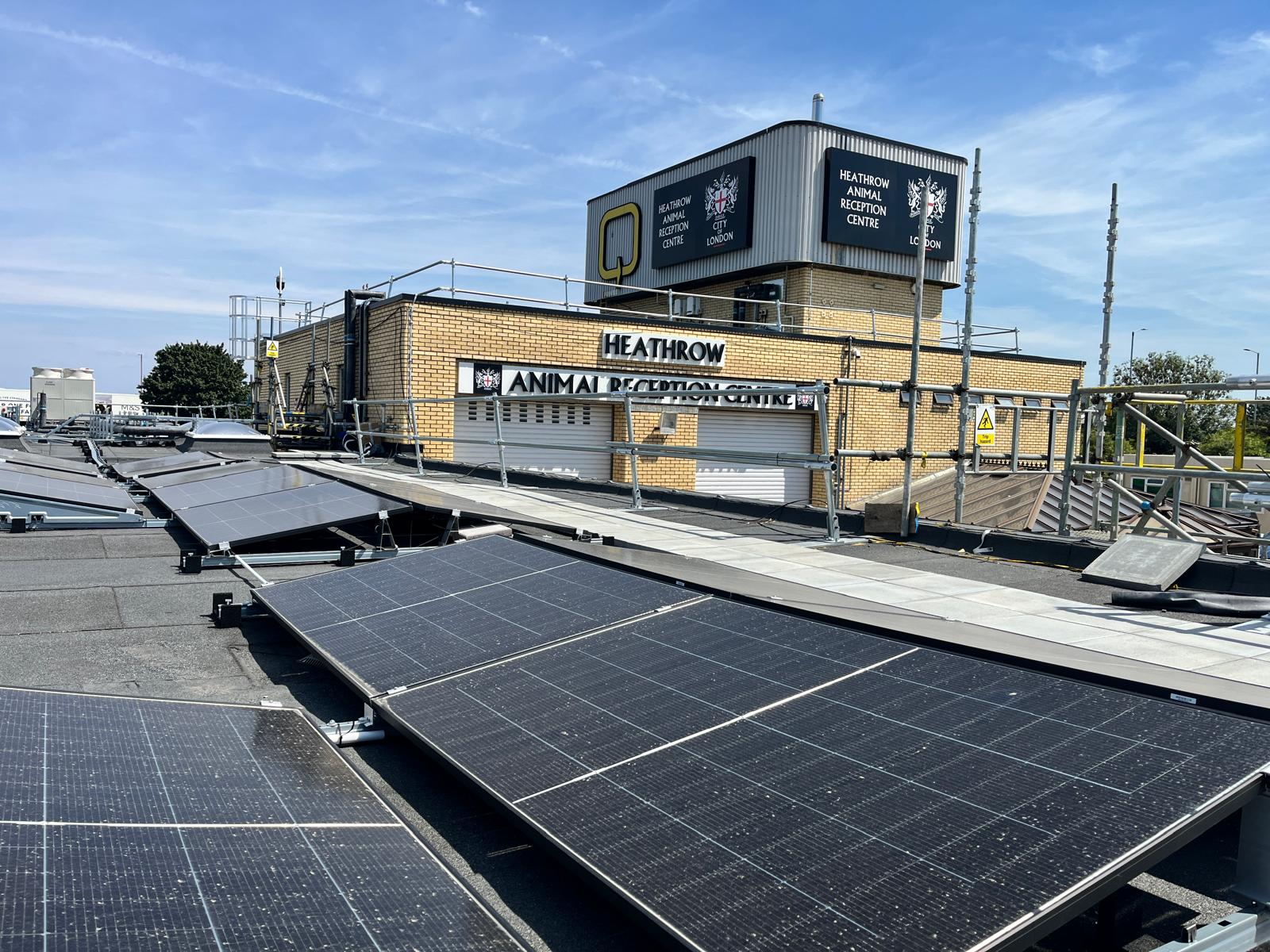
Solar panels on the roof of Heathrow Animal Reception Centre, with HARC main building in the background – photo courtesy of City of London Corporation.
HARC conducts health and welfare checks on all animals entering the UK via Heathrow Airport – from pets and farm livestock to zoo species and exotic consignments. By ensuring that animals entering the country meet strict welfare standards, it protects the animals themselves but also UK biosecurity and prevents the spread of diseases such as rabies.
The centre cares for millions of animals annually, including zoo species and high-value consignments, as well as thousands of pets, hundreds of horses, and millions of fish, reptiles and invertebrates. Operating around the clock, HARC relies on stable, carefully controlled conditions. In fact, the entire upgrade has been delivered without disrupting this essential service.
As well as the solar panels, several low-carbon heat pumps have been installed, helping to replace outdated systems and provide more consistent, energy-efficient temperature control across the specialist facility. The newly installed panels will generate clean electricity on site, helping to power low‑carbon heating and hot water systems, energy‑efficient lighting and upgraded ventilation.
HARC is managed by the City of London Corporation, and the upgrade is part of the corporation’s wider climate action strategy to become net zero across all its own operations by 2027.
Chris Hayward, Policy Chairman at the City of London Corporation, says: ‘Our climate action strategy is delivering real results right across London. Even in some of our most complex environments, we’ve shown that no site is too challenging – cutting carbon while protecting critical national infrastructure. By continuing to invest in HARC, we’re ensuring it is ready for the challenges and opportunities ahead at Heathrow, strengthening the long-term resilience and security of this vital national asset.’
Peter Dunphy MBE, Chair of the Port Health and Environmental Services Committee at City of London Corporation, adds: ‘HARC is one of the UK’s most critical border facilities, operating at the front line of biosecurity. Delivering this upgrade without interrupting our 24/7 operation is a major achievement and underlines our commitment to sustainability alongside resilience. It also supports the high standards of care we provide, helping us maintain the controlled environments animals rely on when they arrive in the UK.’
In related news:
Government launches review of toy safety rules to tackle AI risks
Leave a Reply