









The managing director of Nexer Digital on how she helps organisations to be more accessible.
Hello Hilary. Why should we make our websites and apps accessible?
Because otherwise 20% of your audience can’t use them.
This isn’t just a nice add-on for local authorities. They are bound by rules and duties. They work with citizens of all ages and demographics, with very wide-ranging needs in terms of digital confidence, digital trust and affordability. They have a broad remit to deliver citizen-focused services to the general public, and have to develop sites and online services that are accessible to as many people as possible.

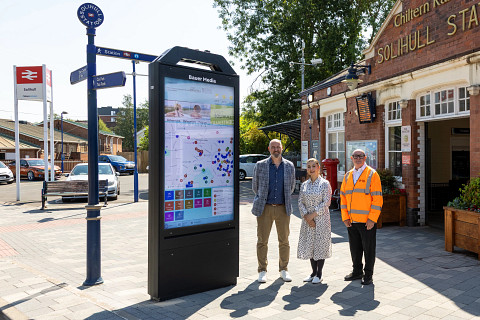
Photo by Rob Hampson / Unsplash
The Web Content Accessibility Guidelines (WCAG) standard is often used to audit and test their sites. They also have to produce accessibility statements on where, when and how their initiatives work for people. If parts of a site or service isn’t currently serving people as it should, they need to state what they’re going to do about that and by when.
It’s not that expensive. And good designers and developers care about making something that works for everyone.
Aren’t local authorities already aware of this?
Yes, but their level of success depends on things like how much they invest, what kind of internal knowledge they’ve got in their teams and who they work with.
One big issue is that testing your compliance with a standard is often a kind of checklist, but that doesn’t cover the whole user journey through a site or service. The result is that a site can be technically compliant with a standard and yet someone with a specific need or disability can’t use it.
Can you give an example of that?
We tested a local primary care website across Greater Manchester, where busy clinicians had been advised that technology would enable people to do preventative health screening for themselves, book appointments and get repeat prescriptions. That all takes the pressure off the frontline surgery and reception staff. It seemed a really good thing to do and there are numerous apps and platforms out there now.
But we did some usability testing and straight away found that, with some of the most popular health apps prescribed by those GPs, someone with a screen reader couldn’t even log in. They couldn’t even get past the initial username field. The GPs were horrified because that was meant to be the go-to app for meeting patient need. Patients weren’t enabled to help themselves, which meant they fell back on traditional methods of engaging with the surgery. So it failed to do the thing it was meant to.
But this could also drive health inequalities, because the digitally included get to the front of the queue. That’s something we see more and more as digital becomes the default.
That’s a slightly different issue to accessibility, isn’t it?
Yes, but very important. Accessibility is about technical compliance: can someone actually do something on a site or app. Digital inclusion is more about whether they want to do it, have the confidence or skills to try it, trust it, and can afford to take part. There are a lot of myths around this.
For example there’s a myth that older people can’t use technology, but many older people have been using technology for decades. Young people are meant to be ‘digitally native’, but that depends on social socioeconomic background, or they might use a mobile all the time but never use Word or Excel because they don’t have access to a laptop or PC. They might have a low data plan so can’t consume video content, but you’ve put out a campaign solely as videos because you think that’s what young people want. There’s a lot of nuance in all of this. You have to speak to the people themselves.
That’s where local authorities — and other organisations — need a little more guidance.
Tell me about your company. How long have you been going?
We started Nexer Digital in 2007 on behalf of the Swedish parent company. They asked me to set up a new IT consulting business in the north-west. They had a prior relationship with AstraZeneca in Macclesfield, so that was the perfect location. We chose to focus very specifically on human-centred design, so all things accessibility, usability and making products and services work for as many people as possible, which is what I’d been working in before, particularly in the public sector and charity space.
What are the main barriers to accessibility on sites?
It’s often a question of attitude. People can see accessibility as a kind of niche or edge-case concern.
They build a site or service, then think, ‘We need to make this accessible.’
A lot of ‘solutions’ in the marketplace are kind of ‘quick win’ plugins and overlays, that are meant to ‘fix’ issues with accessibility — they add an extra toolbar or something. But if you talk to people in the disabled community, you often find these things take time and effort to use. Rather than try to fix things later, it’s much better to bake in accessibility at the start. It’s more affordable, and it just becomes the way you design and build your service. Centre the needs of disabled people right at the start, and you’ll have a better product for everyone.
We might not realise it, but we all already used assistive technology. We’re used to pinching and zooming images on our phones, or using captions or voice tech. That’s all born out of good accessibility practice.
How do you help organisations with this?
We do everything. There’s advising groups, where we give talks to open hearts and minds to the subject. We run training for technical people and coders, designers, content writers and social media teams, giving them the skills and knowledge to start implementing this in practice. We offer auditing and testing, bringing disabled people into the process. Our office is set up to be a usability lab, and we invite in patients, carers and employees to come in and test products as they’re being developed so that we can catch those insights at an early stage. In some cases, we build those products ourselves for clients, and do the full design, development and testing ourselves.
Can you give an example of how you’ve helped a local authority?
We’re doing some local authority audits right now, with people who are building new digital services or extending the functionality of an existing website. They ask us to audit what they’re doing. We always recommend they work with disabled people on this. We employ disabled people in our teams because that kind of lived experience fills any gaps in what the standard sets out.
That will either be a professional audit from our accessibility practice, who will do manual testing but use some automated tools such as screen reader technology or voiceover tech on mobiles, and look at keyboard navigation for people who’ve got motor impairments.
Cognitive issues are also a big thing, with increasing awareness of the needs of neurodivergent audiences out there. We help to test products with people with dyslexia, those with conditions that fall within autism spectrum disorder (ASD) and so on, using inclusive usability testing to bring in people in with those kind of lived experiences to test things.
In some cases, those audits might continue into training. We might train development teams or, in the case of local authorities, that might be outsourced to a third party, so we will work with their design and development agency to instil some of the skills. That might go right the way through to building those public sector websites ourselves.
More often than not, we’re dipping in and out of other people’s work, testing something developed in-house. But if need be, where a client wants to build something entirely new, we will do all the research, build it together, and then we’ll look after it for years to come
How has this space changed since you started?.
It changes all the time. We currently work with version 2.2 of WCAG guidelines, but version 3 will come out some time in the future. The new European Accessibility Act (EAA) came in last year, and although the UK is not technically part of the EU, anybody here delivering products and services or running logistics and shipping to the EU is within scope.
But none of this is new. The web was originally built with a very inclusive framework — it was supposed to be open and accessible. It was always a big part of public sector initiatives online. I can remember awards for most accessible local authority or library sites. I think maybe thanks to marketeers and the mobile app revolution, people lost their focus on that. Now it can be tricky for them to come back and catch up.
There’s also the cost involved. How do you factor that into what you do?
It’s very important to understand what you lose by not being accessible. As I said, you lose 20% of your audience, your customers, if you’re not accessible.
There are other metrics. An organisation called Purple focuses on retail and quantifies the spending power of the average disabled family and their friends in the UK — what it calls the ‘Purple pound.’ If a disabled person has a negative experience on a website, they’ll never go back there and they’ll probably tell their friends and family, too. But if they have a positive, engaging and successful transaction, they’ll be loyal to that site and refer people there. So you can quantify the cost of missed opportunity or the value of gain.
In fact, some of what we do is challenging myths around who an organisation’s customers really are. We work a lot with Auto Trader in Manchester and one myth that came up early on was around the idea that blind people wouldn’t be interested in cars, on the basis that they don’t drive. But blind people will book transport, they might buy a car for a family member or just take an interest. They should still be able to complete a booking on the site.
That’s an example of this affecting retail. What about with the public sector?
It’s harder to quantify with the public sector but local authorities have key performance indicators for self service and people’s ability to complete online transactions. With the example of the GPs in Greater Manchester I mentioned, you can measure how many people gave up online and picked up the phone, or made an appointment in person — putting extra pressure on staff, just because the digital journey failed. Choice is good but when one option fails, that’s not great.
An organisation called Silktide runs league tables of accessible websites, with sector-wide audits like the best-performing local authorities or charities working in the health space. They might look at NHS or GP practice websites, ranking them on who is doing well and who could improve.
What problems do you see when you audit local authority sites?
The visual experience across most government websites, central and local, is now fairly standardised. You know you’re on a government website because of the look and feel, which is good for trust, and it’s not image heavy, or it doesn’t have lots of rich media content or adverts popping up like on commercial websites. That’s good because people want to use the services quickly and cleanly. They don’t want to be served stuff they didn’t ask for and the website might be the only way to perform the particular task online, so they can’t ‘shop around.’
But while most government sites now have a nice, shiny front end, built to GOV.UK digital standards, you can find that two or three levels into a transaction you’re into a legacy backend system, with some big, old database doing the heavy lifting. A common issue we’ve found is with parking fines. You get a notice through the post with a web link printed that you have to then type out, and which might not take you to the right place anyway. Then you have to search around for where exactly to pay, pinching and zooming on your phone to type in your card number. You can pretty much guarantee that that won’t be accessible to somebody reliant on large text or voiceover technology to fill in forms.
But even without the technical side, visual design is an issue. Colour contrast can be a massive problem, where people can’t see text clearly because of the background it’s on. You see that in infographics and adverts on GP websites. A lot of the time, we rely on people reporting these problems — after it’s already out there. Online news sites are littered with pop-ups and other kinds of ads that make the articles difficult to read, unless you’ve got ad blockers and turned off JavaScript and whatever else. For people who don’t know how to do that, it’s just noise. We exist in a noisy world already and technology turns up the volume.
If someone reading this thinks, ‘Yeah, this is something I need to do,’ where should they start?
A good place is to benchmark what you’ve got now. Do an audit involving some disabled and neurodiverse people in the mix, to understand where you are. You might be doing better than you expect, or you might be a little behind.
Then you can work out what you need to do, and who in your organisation has the passion and awareness to make the needed changes to embed this into process practice. That’s it, really. If you can be proactive and get in early, you don’t have the risk of fines or the costly thing of trying to fix something you’re already built.
And what would you like to see done in this space?
One of the things I’m most proud of right now is that we helped NHS England build a new accessibility lab. We helped them build the first one in Leeds five years, but we just helped launch the new flagship accessibility lab in London. Anybody working in and around the research, design and building of digital services for NHS England can go there to meet people from our team and from the NHS who have the lived experience of these things, and talk through what does and doesn’t work as they design and build products and services.
It offers live usability testing but it’s also educational — raising awareness because people think, ‘Now I know, I want to get this right next time.’ We’re really pleased to see that in action. A lot of organisations invest in accessibility in some form, but it might be an audit every year, or an audit and a little bit of training. NHS England have gone fully into the infrastructure, building a kind of beacon where people can come in and talk about they do and don’t know, with those who can help them to understand ways to make things more accessible.
I know funding is a challenge at the moment, but I’d love to see a local authority equivalent.
Hilary Stephenson, thank you very much.
In related news:
Leave a Reply